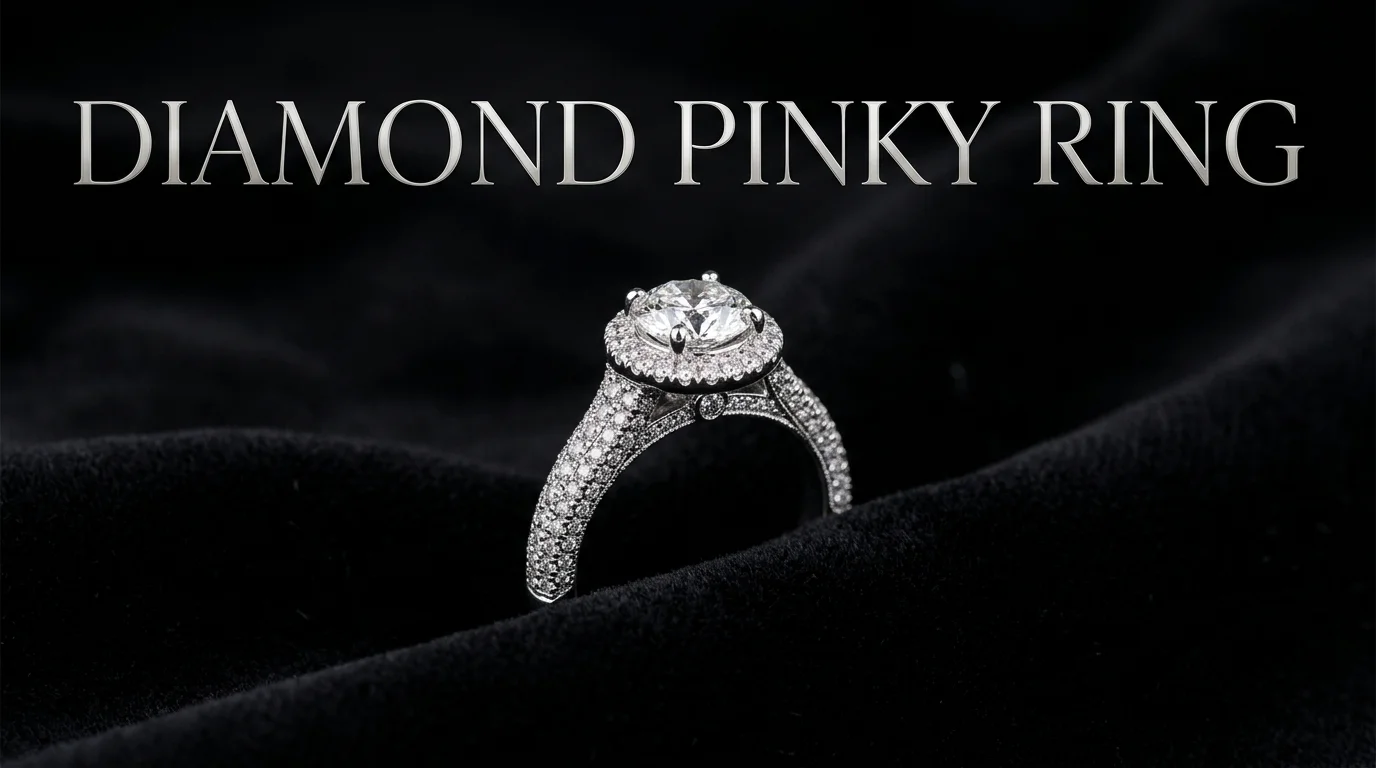
A diamond pinky ring can be understated, bold, traditional, or completely personal. The smaller finger gives diamonds a distinct look without competing with engagement or wedding jewelry. Choosing the right one depends on fit, setting, metal, diamond quality, and how you plan to wear it.
Quick answer: Measure the little finger directly, then decide how much visual impact you want. Low-profile bezels and pavé bands suit frequent wear. Signet styles create more presence. Compare diamond quality, metal durability, comfort, and construction before paying for extra carat weight.
| Buying factor | What to consider |
|---|---|
| Fit | Measure the pinky itself rather than estimating from another finger |
| Ring style | Signet, solitaire, pavé band, bezel, or geometric design |
| Diamond priority | Cut, color, clarity, and carat weight |
| Metal | Yellow gold, white gold, rose gold, or platinum |
| Daily comfort | Band width, setting height, weight, and knuckle clearance |
| Best for subtle styling | Slim bands, small stones, flush or bezel settings |
| Best for a statement | Signets, wider bands, larger centers, geometric settings |
| Buying check | Diamond disclosure, grading details, return policy, and resizing terms |
Key Takeaways
- A smaller finger can make a modest diamond appear more noticeable.
- Signet and bezel designs usually provide a lower, more protected profile.
- Pavé bands offer more surface sparkle without requiring one large center stone.
- Fit should be measured on the actual finger before ordering.
- Diamond cut often affects visible brilliance more than buyers expect.
- There is no universal rule requiring a pinky piece on one specific hand.
- Men and women can use the same buying principles while choosing different proportions.
- Comfort matters more than trend appeal when the piece will be worn regularly.
Why Pinky Rings Are Getting More Attention
The little finger has become a useful place for jewelry that feels expressive without carrying fixed relationship symbolism. Recent fashion coverage has highlighted diamond, signet, and stacked versions on both men and women. Current designs range from delicate stones to wide, architectural bands.
That flexibility makes the style easy to personalize. A small stone can create a restrained finish, while a heavier signet changes the entire hand. Recent fashion coverage also shows the category moving beyond older associations with inherited crests or formal menswear.
Contemporary wearers often choose these rings for personal style, milestones, or self-purchases. They can also complement a watch without crowding the ring finger. Readers exploring broader styling ideas can browse Contntra’s Fashion section for more current wardrobe guides.
What Does Wearing a Ring on the Pinky Mean?
No single meaning applies to every wearer in the United States. Historically, signet versions have represented family identity, professional affiliations, status, or personal symbolism. Today, fashion and individual preference are often stronger reasons.
The hand you choose does not create a universal modern message. Left-hand versions can still reference traditional signet customs for some people. Right-hand versions often function simply as styling choices.
Diamond designs can also mark achievements without resembling traditional engagement jewelry. That makes the smallest finger useful for a promotion, birthday, graduation, or personal milestone. The meaning ultimately comes from the wearer, not a fixed jewelry rule.
How to Choose a Diamond Pinky Ring That Fits Your Style
Start with the amount of visual presence you want. A thin band with pavé stones reads differently from a broad signet with one center stone. Your usual clothing, watch, bracelets, and other rings should guide the proportions.
Then consider how often you will wear the piece. A lower setting is practical for frequent wear because it catches less easily. Taller settings can add drama, but they need more care around clothing and hard surfaces.
Your lifestyle should also influence the band width. Wide rings can feel substantial, while narrow bands disappear more easily during movement. Try several widths before assuming a larger design will feel better.
Compare the Main Ring Styles
| Style | Visual effect | Advantages | Possible drawback | Best suited to |
|---|---|---|---|---|
| Diamond signet | Bold and structured | Strong presence, broad design surface | Can feel heavy | Statement styling |
| Pavé band | Continuous sparkle | Bright appearance without one large stone | Small stones need secure settings | Everyday fashion |
| Bezel-set center | Modern and clean | Stone edge receives more protection | Less exposed diamond surface | Frequent wear |
| Prong-set solitaire | Classic and bright | More diamond visibility | Higher settings may catch | Dressier use |
| Geometric design | Contemporary | Distinctive and expressive | Harder to pair with other rings | Modern wardrobes |
Verdict: A low-profile bezel or compact pavé design is the strongest all-purpose choice for regular wear. A signet is better when visual impact matters most. A prong-set center suits buyers willing to trade some practicality for a more exposed stone.
Pay Attention to Diamond Quality, Not Only Size

The Gemological Institute of America uses four major factors to describe diamonds: cut, color, clarity, and carat weight. GIA explains that carat measures weight, not visual dimensions alone. A larger carat number does not automatically mean a more attractive stone.
Cut deserves particular attention because it strongly affects how a diamond handles light. GIA notes that cut influences brightness, fire, and scintillation in round brilliant diamonds. Keep those four factors in mind when comparing stones.
Clarity and color should also be considered alongside the metal and setting. Yellow or rose gold may make warmer tones less obvious than bright white metals. Ask for clear grading information when a significant center stone drives the price.
Choose a Metal That Matches Your Wardrobe
Yellow gold gives diamonds a warmer and more traditional frame. It pairs naturally with brown leather, cream clothing, earth tones, and other gold jewelry. It also works especially well for signet-inspired designs.
White gold creates a brighter, cooler appearance around colorless stones. Platinum offers a similar color with different weight, composition, and pricing. Buyers should compare maintenance requirements before choosing either option.
Rose gold adds warmth without looking as traditional as yellow gold. Its softer color can suit smaller, less formal designs. The best metal is usually the one already repeated across your watch, bracelet, or everyday accessories.
Get the Pinky Size Right
Do not estimate the size by subtracting numbers from your ring-finger measurement. Finger proportions vary too much for that approach to be dependable. Measure the exact finger where the piece will sit.
Measure when your hands are at a comfortable indoor temperature. Cold fingers can measure smaller, while heat may cause temporary swelling. The ring should pass the knuckle without spinning freely once seated.
Band width can also affect the required size. A broad band usually feels tighter than a narrow one at the same nominal measurement. Ask the seller whether the particular design requires sizing adjustments.
Styling Ideas for Women
A slim diamond band can balance larger rings without making the hand appear crowded. Try keeping the smallest piece away from an already busy stack. Matching the metal to earrings or a watch can make the combination feel intentional.
A larger signet creates a different effect and can carry an outfit when you wear minimal jewelry elsewhere. It works particularly well with clean tailoring or monochrome clothing. Contntra’s guide to women’s white jeans offers another example of building outfits around simple wardrobe foundations.
You can also treat the ring as a standalone focal point. A single distinctive design often looks stronger than several competing statement pieces. That approach keeps the diamonds noticeable without making the styling feel formal.
Styling Ideas for Men
Men can start with a medium-width band or compact signet if they are new to hand jewelry. Those proportions provide presence without dominating the hand. A watch on the same side can help create visual balance.
Diamond styles do not need to be oversized to look masculine. Clean geometry, substantial metal edges, and lower settings can create a strong profile. Current men’s fashion increasingly treats jewelry as personal styling rather than formal symbolism.
The same principle applies to footwear and other traditionally gendered pieces. Personal fit and proportion matter more than old category labels. Contntra’s men’s high-heels sizing and style guide explores that broader shift in fashion choices.
How Much Should You Spend?
Prices vary widely because metal weight, diamond characteristics, craftsmanship, branding, and design complexity all influence cost. Simple diamond versions from mainstream U.S. retailers often start at a few hundred dollars. Designer examples can reach several thousand dollars.
Set a budget before comparing stones or labels. Decide whether your money should favor diamond size, diamond quality, precious-metal weight, or designer craftsmanship. Paying more only makes sense when the extra cost improves something you value.
Luxury pricing can also reflect rarity and brand prestige, not just materials. Contntra’s Himalaya Birkin pricing guide shows how strongly scarcity and positioning can influence fashion prices. Apply the same skepticism when comparing high-priced jewelry.
What to Check Before Buying
Use a short buying checklist before placing an order. Minor online details can affect comfort and long-term satisfaction. Written product information also makes it easier to compare sellers.
- Confirm whether the stones are natural or laboratory-grown.
- Review cut, color, clarity, and total carat information.
- Check the precious-metal type and purity.
- Ask whether the size can be adjusted later.
- Read the return and exchange policy.
- Confirm whether customized pieces become final sale.
- Look at the ring’s height from several angles.
- Check whether independent grading information accompanies a significant center stone.
Do not rely entirely on front-facing product images. Side views reveal setting height, gallery construction, and how far the ring stands above the finger. Video can also show how the piece looks during normal hand movement.
Common Buying Mistakes
The first mistake is buying by appearance without confirming the size. A loose ring can rotate constantly, while an undersized one becomes uncomfortable quickly. Resizing may also be difficult on continuous pavé or complex geometric designs.
Another mistake is paying for carat weight while ignoring cut and construction. More weight does not guarantee more visible sparkle or a better-looking finished piece. GIA’s 4Cs provide a useful framework for comparing what you receive for the price.
The third mistake is overlooking daily wear. High settings, sharp edges, and broad tops can become annoying if you use your hands constantly. Choose the piece for your routine, not a product photograph.
Frequently Asked Questions
What finger does a diamond pinky ring go on?
It is designed for the little finger on either hand. There is no universal U.S. rule requiring the left or right side. Choose the hand that feels comfortable and works with your other jewelry.
Can women wear a pinky ring with an engagement ring?
Yes, because the two pieces sit on different fingers and can serve different purposes. Keeping one design simpler can prevent the combination from feeling crowded. Matching metal colors is optional, not required.
Can men wear diamonds on the little finger?
Yes, and modern men’s jewelry includes signets, pavé bands, bezel designs, and gemstone styles. Proportion usually matters more than gender labels when choosing the design. A medium-width band is an easy starting point.
Should a pinky piece fit tighter than other rings?
It should feel secure without pinching or restricting movement. Because the finger may taper more sharply, spinning can become noticeable with top-heavy designs. Measure the finger directly and account for the knuckle.
Is a natural or lab-grown diamond better for this style?
Both can work, depending on your priorities and budget. The key is receiving clear disclosure about what you are buying. Compare appearance, grading details, price, and seller policies rather than relying on the label alone.
The Best Choice Depends on How You Will Wear It
The strongest purchase balances appearance, comfort, construction, and a price you understand. Start with accurate sizing, then choose the profile and metal before comparing diamond specifications. That order prevents an impressive stone from ending up in a ring you rarely wear.
For everyday use, a secure low-profile design is hard to beat. Choose a signet or larger center when you want the piece to lead the entire look. Continue exploring Contntra’s Fashion guides for more practical style and buying advice.