You probably bought one this week. The gallon of milk parked at the back of the store, the $4.99 chicken, the printer that costs less than a set of cartridges. Each one is a loss leader, and the price on it was set on purpose.
A loss leader is a product sold at or below cost to pull shoppers through the door. The seller accepts a small hit on that item because the same trip usually includes full-margin goods. Success gets measured by basket value and repeat visits, never by the profit on the discounted item itself.
| Key detail | What you need to know |
|---|---|
| Also called | Leader pricing, key value item, door-buster |
| Typical products | Milk, eggs, bread, rotisserie chicken, game consoles, printers |
| Who uses it | Supermarkets, warehouse clubs, hardware makers, online stores |
| The goal | More trips, bigger baskets, buyers who come back |
| How it is judged | Basket value and incremental visits, not item margin |
| Biggest risk | Cherry pickers who buy the deal and walk |
| Rules to check | Several states restrict below-cost selling on certain goods |
| Break-even test | Extra gross profit must clear the total subsidy |
Key takeaways
- The discount buys traffic. The rest of the cart pays for it.
- Only incremental visits count. Shoppers who were coming anyway cost you money.
- Do the arithmetic first: loss per unit, times units, divided by your margin on everything else.
- Quantity limits are the cheapest protection you have.
- Some states set a price floor on fuel, alcohol, tobacco and dairy.
How loss leader pricing works in practice
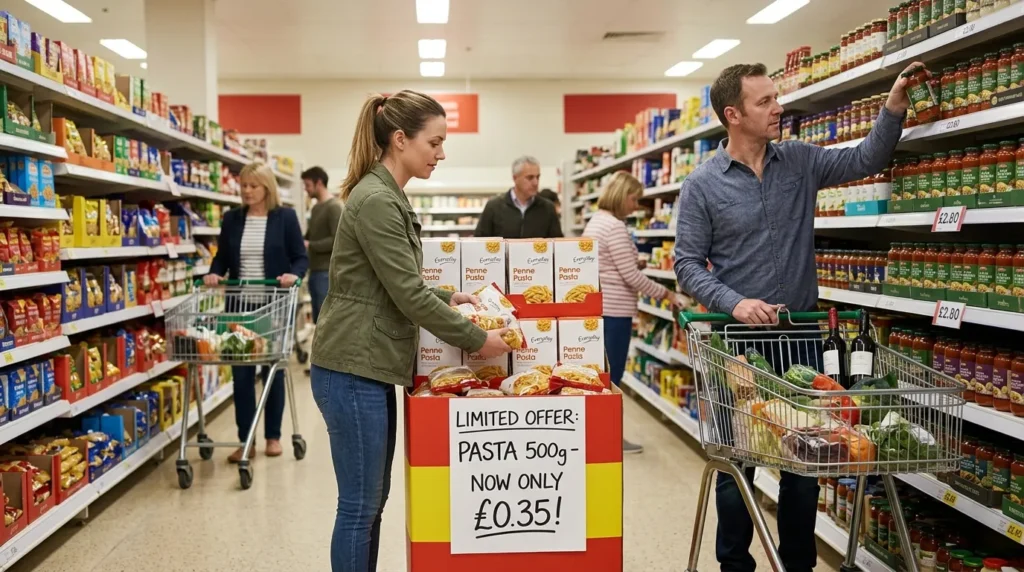
Shoppers do not memorize 30,000 prices. They memorise about a dozen. Milk, eggs, bread, bananas, gas, a hot chicken. Retailers call these key value items, and they set your whole impression of a store.
Price one of them low enough and people notice. They come in, and most of them do not leave with only that item. Stores give up a few cents or a few dollars on the headline product, then earn it back across the rest of the cart.
Three things have to line up before the tactic pays:
- The cheap item is one people genuinely price-check.
- The trip pulls other purchases along with it.
- Enough of the traffic is new.
That last condition gets skipped almost everywhere. Incremental visits matter more than total units sold, because a regular who was already driving over on Saturday just cost you a dollar for nothing.
Five real examples you have already paid for
- Supermarket staples. Milk, eggs and bread sit far from the entrance at a price that barely covers cost. You walk past the bakery and the deli to reach them, which is the whole design.
- Costco’s rotisserie chicken. It has held at $4.99 for years while poultry costs climbed, and the volume is enormous. Costco reported selling more than 150 million of them in 2025. Costco pulls the same trick with attention rather than price on its viral seasonal buys, which get shared online long before anyone reaches a register.
- Game consoles. Sony has sold PlayStation 5 hardware at or below build cost for long stretches. Money arrives later through games, add-ons and subscriptions.
- Printers and ink. A $79 printer with $60 cartridges is the razor-and-blades model in plain sight. That device is the hook. Refills are the business.
- Black Friday door-busters. A TV at an impossible price, 20 units per store, one per household. That limit is not a flaw in the offer. It is the offer.
Where the law draws a line
Below-cost pricing is not open season across the US. Several states have long-standing minimum markup rules, often written into what they call an unfair sales act. These laws require a floor above cost on selected goods.
Gasoline, alcohol, tobacco and dairy are the categories that come up most often. Rules differ by state and by product, and enforcement varies just as much. If your promotion touches one of those aisles, read your own state’s rules before you print a sign.
Most explainers on this topic leave that out entirely.
The break-even math nobody shows you
Here is the part the definition posts skip. A price cut this deep is only worth running if you can say what it has to earn back.
Take an independent grocer running a one-week milk promotion.
| Line | Figure |
|---|---|
| Wholesale cost per gallon | $3.20 |
| Promotional shelf price | $1.99 |
| Loss per unit | $1.21 |
| Gallons sold in the week | 900 |
| Total subsidy | $1,089 |
| Gross margin on everything else | 28% |
| Extra full-price sales needed | $3,890 |
Work it backward. Our grocer hands back $1,089 across the week. At a 28% margin on the rest of the cart, it needs roughly $3,890 of extra sales to get back to even.
Now the honest part. Those 900 buyers are not 900 new customers. Say 300 of them showed up only because of the price. Basket uplift then lands on those 300 people, and it works out to near $13 each.
Thirteen dollars is a fair ask in a grocery store. It is absurd in a shop where the average basket is $8. That single comparison tells you more than any definition will.
Calculate it before the promotion, not after. If you like arithmetic done in public, our APR versus APY breakdown works the same way.
What goes wrong, and what it costs
Three failure modes turn up again and again. None of them are exotic. All of them are survivable if you spot them early.
Cherry pickers. Some shoppers buy the deal and nothing else. Every one of them costs the grocer $1.21 and returns nothing. Quantity limits, two-per-customer signs and membership requirements exist to cap that downside.
Price wars. A rival matches your price, then undercuts it. Now you are both selling milk at a loss, and neither of you gained a single customer.
Reference-price damage. Run the same offer every week and $1.99 becomes the real price in people’s heads. Going back to $3.99 then reads as a hike, and the risks compound the longer you wait.
Loss-leader pricing versus the alternatives
It helps to see how the tactic is different from the discounts sitting next to it.
| Tactic | What it does | Suits | Main risk |
|---|---|---|---|
| Loss-leader pricing | Below-cost price on a known item | Stores with large baskets | Cherry pickers |
| Penetration pricing | Low launch price, raised later | New entrants | Buyers leave at the raise |
| Freemium | Free tier, paid upgrade | Software and apps | Free users never convert |
| Clearance | Cuts price to move old stock | Any retailer | Trains bargain hunting |
| Buy one, get one | Volume deal on one product | Fast-moving goods | Pulls forward future sales |
Scarcity is the opposite lever. Rather than cutting a price to build traffic, some sellers hold supply tight and let the number climb. The gap between retail and resale on a Himalaya Birkin shows how far that can run. Same goal, reversed method.
How to run one without bleeding money
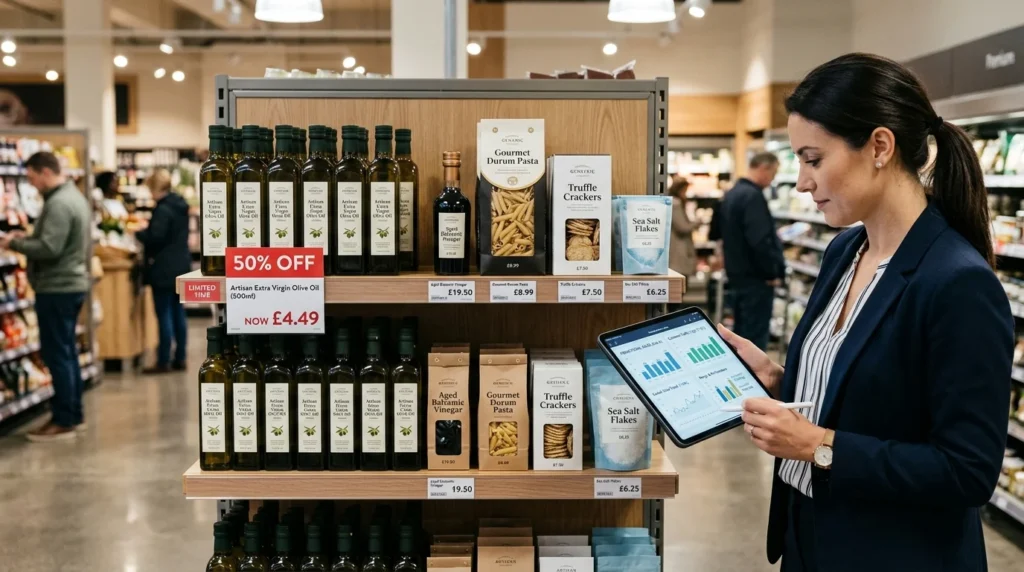
- Pick an item people price-check on instinct. An obscure product moves nobody.
- Set the loss you are willing to fund, in dollars, before anything gets printed.
- Place the item so the walk to it earns you something.
- Cap the quantity per customer.
- Track basket value and new faces, not units sold.
- End it if the average basket has not moved in two weeks.
Small businesses can use this too. A coffee shop with a $2 pastry and a $6 latte is doing it already.
Your next move
Pull your last 90 days of sales and find the item your customers price-check hardest. Work out what one week below cost would actually cost you. If that number makes you flinch, you have learned something cheap. If the basket math clears it, you have a promotion worth testing next month.
FAQ
Not always. Some sit right at cost or at a token margin. That label covers any item priced to pull traffic rather than to earn its own profit.
Because the walk is the payoff. Every aisle between the door and the dairy case is a chance to sell you something with a real margin.
Usually no. Several states restrict it on specific goods such as fuel and alcohol, and pricing designed to force a rival out of business can attract scrutiny. Check your state before you build a campaign on it.
Yes, though shipping eats the math fast. It works best when the first order leads naturally to a second, as with refills, consumables or a subscription.
A discount protects some margin. This one gives up margin on purpose to buy traffic you would not have had.