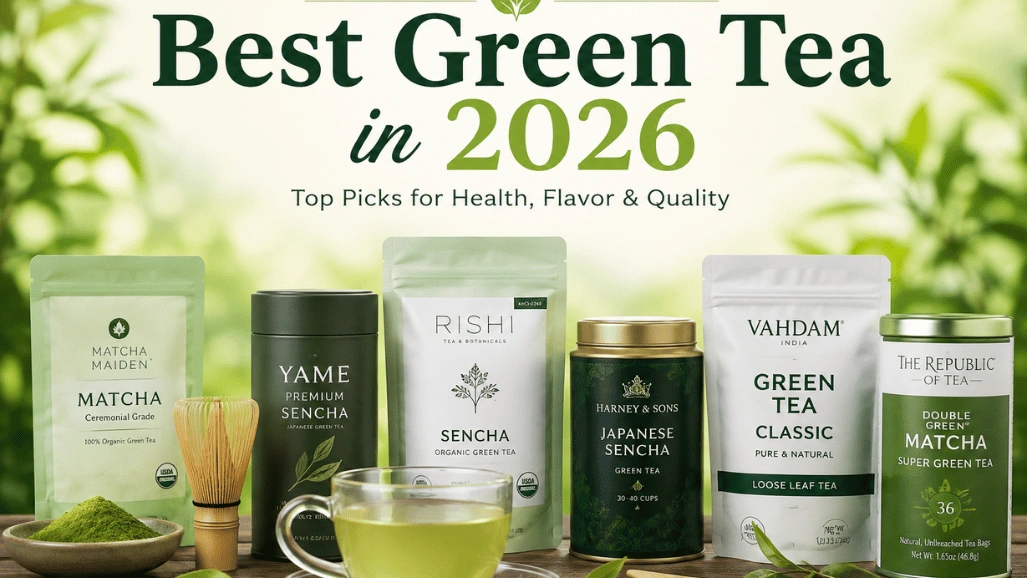
The best green tea in 2026 for you depends on one number almost nobody prints: what a single cup costs. A $36 tin from Kyoto sounds absurd next to a $4 box from the grocery store until you divide by the number of cups inside. Then the gap shrinks to pocket change per morning.
So we priced seven of them that way. Every price below came off the seller’s own US store or a national retailer in August 2026. We logged the brewing spec each seller prints and the region the leaf came from. The result is a ranking of the best green tea by value, not by brand recognition.
Short answer: Harney & Sons Japanese Sencha wins for most drinkers at roughly 40 cents a cup, with a 4-ounce tin at $15.00 covering 30 to 40 cups. Bigelow Classic Green is the cheapest cup worth drinking at 19 cents. Jade Leaf Teahouse matcha is the pick if you want a whisked bowl instead.
The Seven Picks at a Glance
| Tea | Format | Size and price | Roughly per cup | Best for |
| Harney & Sons Japanese Sencha | Loose leaf | 4 oz tin, $15.00 | $0.40 | Top pick |
| Yamamotoyama Genmaicha | Loose leaf | 5.3 oz bag, $8.00 | $0.22 | Drinking all day |
| Bigelow Classic Green | Tea bags | 20 bags, $3.79 | $0.19 | Grocery run |
| ITO EN Organic Sencha | Loose leaf | 2 oz bag, $10.16 | $0.54 | First loose leaf |
| Jade Leaf Ceremonial Matcha | Powder | 1 oz tin, $26.99 | $0.90 to $1.80 | Matcha bowls and lattes |
| Rishi Organic Dragon Well | Loose leaf | 3.5 oz, $26.50 | $1.06 | Chinese pan-fired style |
| Ippodo Kaboku Sencha | Loose leaf | 2.8 oz bag, $36.00 | $4.50 a pot | A weekend splurge |
Key Takeaways
- Cost per cup, not shelf price, is what separates these teas. The spread runs from 19 cents to about $4.50.
- Loose-leaf beats bags on flavor and often on price, because a bag holds a teaspoon of dust and a tin holds a whole leaf.
- Water temperature matters as much as the tea. Most of these want 160 to 180 degrees Fahrenheit, not a rolling boil.
- Check the harvest year on the pack. The 2026 spring crop reached US shelves in late spring.
- All prices were checked in August 2026 and will drift.
How We Picked These Seven

Four rules did the filtering.
- Sold to US buyers by the brand itself or a national retailer, no import forwarding.
- A brewing spec printed by the seller, so the temperature is theirs and not our guess.
- A named growing region, down to the prefecture or province.
- Enough weight and serving information to calculate a per-cup cost.
That fourth rule knocked out a surprising number of famous names. Prices move, so we recheck them and post updates on the Contra home page as they change.
The Seven Best Green Teas, Ranked
1. Harney & Sons Japanese Sencha, best overall
Shizuoka leaf from the Kaburagi family, sold as a 4-ounce loose tin for $15.00. Harney puts 30 to 40 cups in that tin, which lands near 40 cents each. Brew it at 160 degrees for two to three minutes, and you get grass, citrus, and a little toasted bread.
- Pros: specialty quality at supermarket money, sold in sachets too, forgiving if you overshoot the temperature slightly.
- Cons: the flavor is medium-bodied rather than intense, so umami hunters will want Pick Seven.
2. Yamamotoyama Genmaicha, Best for Drinking All Day
Toasted rice does two things here. It stretches the leaf, and it softens the edge that puts people off sencha. A 5.3-ounce bag runs $8.00, which works out to around 22 cents a cup at the teaspoon dose the label suggests.
- Pros: popcorn aroma, gentle at 170 to 190 degrees, cheap enough to drink by the pot.
- Cons: the rice dominates, so this is a poor way to judge what a fine leaf tastes like.
3. Bigelow Classic Green, Best Grocery Pick
Nineteen cents a bag at Target, individually foil wrapped, on the shelf of nearly every store in the country. That is the case for it.
The case against sits on the box. Bigelow tells you to pour water at a rolling boil and steep for three minutes, which is how most Americans learn that this drink is bitter. Drop the kettle off the boil for two minutes first, then steep for two.
- Pros: cheapest cup here, foil pouches keep it fresh, available everywhere.
- Cons: fanning rather than whole leaf, and the printed instructions actively hurt the cup.
4. ITO EN Organic Sencha, Best First Loose Leaf

A 2-ounce bag at $10.16 is a low-risk way to leave tea bags behind at a teaspoon a cup; that is 19 cups, or about 54 cents each. ITO EN describes it as verdant and clean, and that is fair: it is a straightforward Japanese profile without much weight.
- Pros: a small bag means you finish it while fresh, widely stocked, and organic.
- Cons: costs more per cup than the Harney tin while offering less depth.
5. Jade Leaf Organic Ceremonial Matcha, the Best Matcha
Teahouse Edition, first harvest leaf from Uji and Kagoshima, $26.99 for a 1-ounce tin. Jade Leaf rates that tin at 15 to 30 servings, so a bowl costs 90 cents to $1.80 depending on how strong you whisk it. The brand lists 20 to 40 mg of caffeine per serving.
- Pros: no bitterness at half a teaspoon, works in a latte, you drink the whole leaf.
- Cons: you need a whisk or a frother, and an open tin fades within weeks.
6. Rishi Organic Dragon Well, Best Chinese Pan-Fired Style
Longjing from Xuan’en in Hubei, pan-roasted flat leaf, $26.50 for 3.5 ounces and 25 servings or more. Rishi calls for 160 to 180 degrees and a four-minute steep, which is unusually long for this category. Expect roasted chestnut and low tannin instead of the seaweed note of a steamed Japanese leaf.
- Pros: a genuinely different flavor family, low bitterness, generous servings per bag.
- Cons: about a dollar a cup and the long, steep punishment for anyone who wanders off.
7. Ippodo Kaboku Sencha, Best Splurge
Ippodo has sold tea in Kyoto since 1717. Kaboku is its everyday sencha, $36.00 for 2.8 ounces, brewed at 176 degrees for 60 seconds with two tablespoons of leaf. That is eight pots per bag, roughly $4.50 a pot, and each pot gives a second infusion.
- Pros: deep umami and a long finish, cold brews beautifully, and arrives fresh.
- Cons: the priciest option here by a wide margin, and it rewards a scale and a thermometer.
Bags, Loose Leaf, or Matcha: What You Pay Per Cup
The best green tea format decides both cost and ceiling. A supermarket bag holds roughly two grams of broken leaf and gives one cup. Loose leaf gives you a heaping teaspoon of whole leaf and a second infusion from the same pot, so the real cost per cup drops below the sticker math. Matcha is different again: you drink the powder, so a spoonful delivers far more flavor and caffeine than the same weight of steeped leaf.
Water temperature is where most cups go wrong.
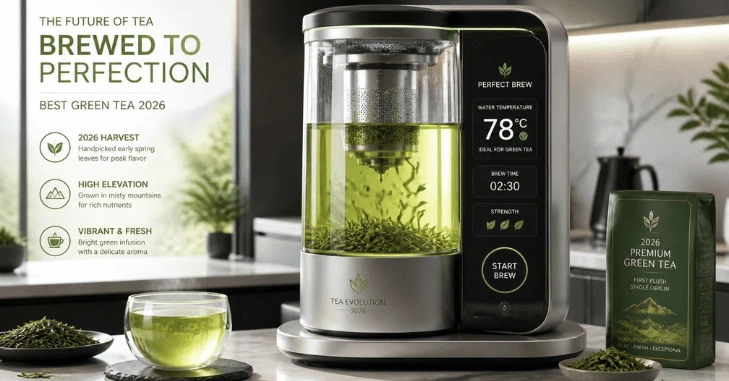
The sellers themselves disagree, and the gap is instructive. Harney and Rishi print 160 degrees for sencha. Ippodo says 176. Bigelow says rolling boil, which is 212.
| Type | Water | Steep | Leaf per 8 oz cup |
| Japanese sencha | 160 to 176°F | 45 to 90 seconds | 1 tsp |
| Genmaicha | 170 to 190°F | 30 to 60 seconds | 1 tsp |
| Chinese pan-fired | 160 to 180°F | up to 4 minutes | 1 tsp |
| Matcha | 175 F | whisked, no steep | 1/2 tsp powder |
| Supermarket bag | 185 F | 2 minutes | 1 bag |
No thermometer? Boil the kettle, take the lid off, and wait two minutes. That drops most kettles into the 170s.
Harvest year, freshness, and storage
Green leaf is unoxidized, which is exactly why it stales fast. Japan’s spring crop, shincha, is picked in April and May and reaches US sellers within weeks, so a bag bought now should say 2026 somewhere on it.
Three habits protect what you paid for:
- Buy the smallest pack you will finish in two months, not the pound bag on sale.
- Keep it sealed, opaque, and away from the stove, since heat and light do the damage.
- Skip the fridge unless the pack is unopened and airtight, because condensation ruins the leaf.
Matcha ages fastest of all. A tin that has been open since spring will taste flat and look dull rather than electric, so buy an ounce at a time.
Verdict: The Best Green Tea for Most People
Buy the Harney & Sons Japanese Sencha. It costs about 40 cents a cup, it comes from a named grower in Shizuoka, and it tastes like a specialty tea while pricing like a supermarket one. Choose Bigelow if you want the cheapest drinkable cup, Jade Leaf if you want matcha, and Ippodo Kaboku when you feel like spending real money on a pot.
Start with one tin and a cheap kitchen thermometer this week. That pair changes more about your cup than any brand swap will. Elsewhere on the site, our profile of Chris Daughtry’s daughter covers a very different kind of story.
Conclusion
Finding the best green tea in 2026 is less about buying the most expensive brand and more about choosing the tea that matches your taste, budget, and brewing style. While premium Japanese and Chinese teas deliver exceptional flavor, you can still enjoy a high-quality daily cup without spending a fortune.
Comparing the cost per cup, harvest freshness, leaf quality, and brewing temperature gives a much clearer picture of value than the shelf price alone. For most people, Harney & Sons Japanese Sencha offers the best balance of quality and affordability, making it an excellent everyday choice.
FAQ
Genmaicha or a sencha in sachets. Both forgive bad water temperature, and the toasted rice in genmaicha hides the vegetal edge that new drinkers usually dislike. Move to loose leaf once you like the taste.
Yes, on flavor and usually on cost. The whole leaf holds its aromatic oils longer than the broken fannings in a bag, and it gives you a second steep. The Harney tin proves the price point: 40 cents a cup against 19 cents for a much plainer bag.
Neither is better; they are different drinks. You steep sencha and throw the leaf away. You whisk matcha and swallow the whole leaf, which is why one bowl carries more caffeine than one cup of steeped tea.
Between 20 cents and $1.00 in 2026. Under 20 cents, you are drinking fannings, and above a dollar, you are paying for rarity, ceremony, or a famous house rather than a better daily cup.
Look for a harvest year or a packed-on date, and buy a size you will finish quickly. Fresh leaf smells sweet and grassy through the bag. A dull, hay-like leaf has been sitting somewhere warm.