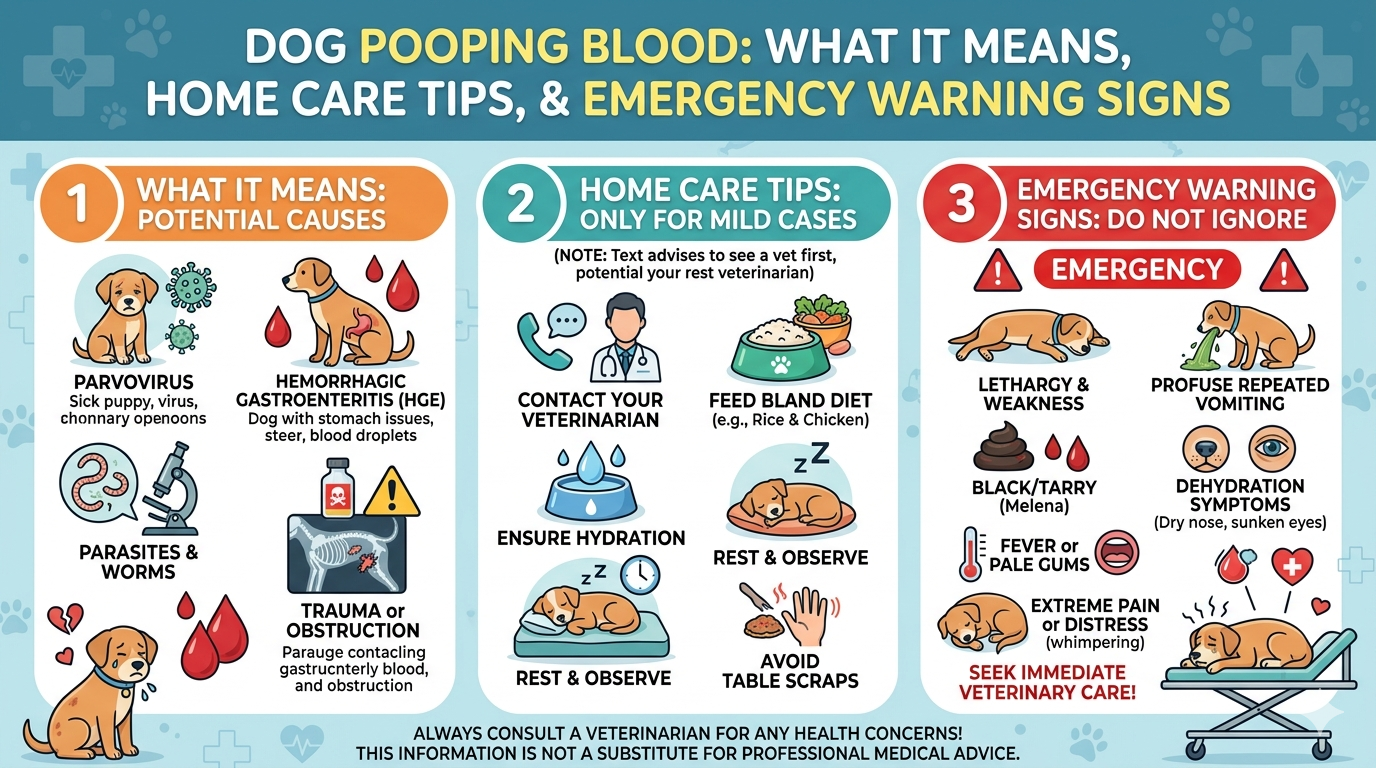
Noticing Dog Pooping Blood can be very distressing for any pet owner. It is a symptom that should never be overlooked, as it may indicate an underlying health problem ranging from minor digestive irritation to more serious internal conditions. More from us: Cat not eating.
In many cases, blood in a dog’s stool may appear suddenly and without other obvious symptoms. However, understanding what it means, how to respond at home, and when to seek urgent veterinary care can make a major difference in your dog’s recovery.
It helps you understand the possible causes and what each sign may indicate about your dog’s health. You will also learn when home care is enough and when professional veterinary help is necessary. The goal is to help you make informed decisions without delay or confusion.
| Category (TLBR) | What You May Notice | What It Means | Best Action |
| Mild Digestive Upset | Small streaks of bright red blood, soft stool | Minor irritation or diet change | Monitor at home, bland diet, hydration |
| Parasites | Blood in stool, weight loss, diarrhea | Worm or parasite infection | Vet check and deworming treatment |
| Colitis | Frequent stool, mucus, and blood | Colon inflammation due to stress or food | Vet consultation + diet adjustment |
| Bacterial/Viral Infection | Fever, vomiting, bloody diarrhea | Serious infection affecting the gut | Immediate veterinary care |
| Dietary Indiscretion | Dog ate garbage/foreign food, mild blood | Stomach irritation | Temporary fasting + bland food |
| Emergency Condition | A large amount of blood, black stool, and collapse | Internal bleeding or severe disease | Emergency vet visit immediately |
| Puppy Cases | Even small blood in stool | High-risk due to weak immunity | Urgent veterinary attention |
Understanding Dog Pooping Blood: What It Really Means?

When a dog passes blood in stool, it usually indicates irritation or damage somewhere in the digestive tract. The appearance of blood can help identify the possible cause.
There are two main types:
- Bright red blood (hematochezia): Usually comes from the lower intestines or colon
- Dark, tarry Stool (melena): Suggests bleeding in the stomach or upper intestines
Blood in a dog’s stool is not a disease on its own; instead, it is a warning sign of an underlying health issue that requires proper attention and care.
Common Causes of Blood in Dog Stool
There are several reasons why this condition may appear. Some are mild, while others require urgent care.
1. Dietary Indiscretion
Dogs often eat things they shouldn’t, such as garbage, spoiled food, or foreign objects. This can irritate the intestines and cause bleeding.
2. Parasites
Worms like hookworms or whipworms can damage the intestinal lining.
3. Infections
Bacterial or viral infections, such as parvovirus, can lead to severe intestinal inflammation.
4. Colitis
Inflammation of the colon often causes mucus and blood in the stool.
5. Stress
Sudden changes in environment or routine can trigger digestive upset.
6. Serious Internal Conditions
In rare cases, it may indicate ulcers, tumors, or clotting disorders.
Symptoms That May Accompany Dog Pooping Blood

If your dog is experiencing this issue, you may also notice:
- Diarrhea or frequent stool
- Vomiting
- Loss of appetite
- Weakness or lethargy
- Abdominal discomfort
- Dehydration
These signs help determine the seriousness of the situation.
Possible Causes and Severity Levels
| Cause | Symptoms | Severity | Action Required |
| Dietary Indiscretion | Mild diarrhea, occasional blood | Low | Monitor at home |
| Parasites | Weight loss, diarrhea, and blood | Medium | Vet treatment needed |
| Colitis | Frequent stool, mucus, and blood | Medium | Veterinary care recommended |
| Bacterial Infection | Fever, vomiting, weakness | High | Immediate vet visit |
| Parvovirus | Severe diarrhea, dehydration | Critical | Emergency treatment |
| Internal Disease | Dark stool, fatigue | High | Urgent diagnosis |
Home Care Tips for Mild Cases
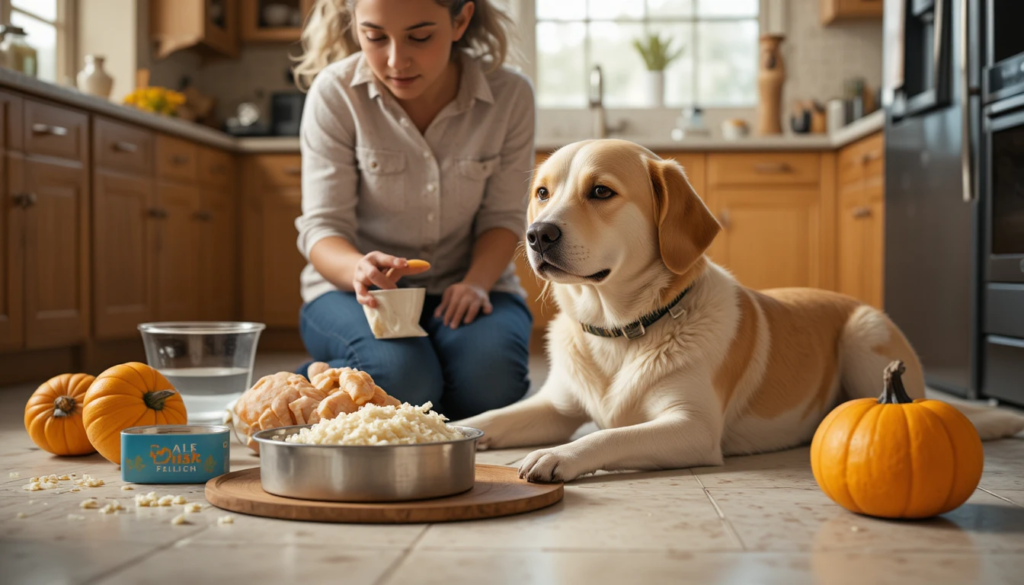
If symptoms are mild and your dog remains active, you can try supportive care at home while closely monitoring.
1. Temporary Fasting
Withhold food for 12–24 hours (only for adult dogs) to allow the digestive system to rest.
2. Bland Diet
After fasting, introduce easy-to-digest foods such as:
- Boiled chicken (no seasoning)
- Plain rice
- Pumpkin puree (small amounts)
3. Hydration
Ensure your dog drinks enough water to prevent dehydration.
4. Monitor Stool
Keep an eye on:
- Frequency of bowel movements
- Amount of blood
- Stool consistency
5. Avoid Human Medicines
Never give painkillers or antibiotics without veterinary advice.
When Dog Pooping Blood Becomes an Emergency
Some cases require immediate veterinary attention; do not delay if you notice large amounts of blood in the stool, black tar-like stool, continuous vomiting, severe weakness or collapse, or signs of dehydration such as dry gums and sunken eyes.
Puppies showing these symptoms are at especially high risk and need urgent care. In such situations, Dog Pooping Blood: What It Means, Home Care Tips, and Emergency Warning Signs You Shouldn’t Ignore becomes a critical warning sign of a potentially life-threatening condition.
Veterinary Diagnosis and Treatment

A veterinarian may perform several tests to identify the cause:
- Stool analysis for parasites or bacteria
- Blood tests to check infection or organ function
- X-rays or ultrasound for internal issues
Treatment depends on the diagnosis and may include:
- Antibiotics or deworming medicine
- Fluid therapy for dehydration
- Special prescription diets
- Anti-inflammatory medications
Early diagnosis greatly improves recovery chances.
Conclusion
Blood in a dog’s stool is a symptom that should never be ignored. While some cases may be minor and manageable at home, others can be serious or even life-threatening if not treated promptly. Early observation and quick response can make a major difference in your dog’s recovery.
The key is to observe your dog closely, provide appropriate home care when needed, and seek veterinary care when warning signs appear. Early action can make a significant difference in your dog’s health, comfort, and recovery. By staying informed and attentive, you can ensure your pet gets the care it needs at the right time.
Want to know about Can Dogs Have Cherries? Everything Pet Owners Need to Know About Risks, Benefits, and Safety Check out our Pets category.
FAQs
Not always. Mild cases may be due to diet changes or minor irritation, but they should still be monitored carefully.
Yes, stress can lead to colitis, which may cause mucus and blood in the stool.
In mild cases, short fasting followed by a bland diet is recommended. Severe cases require vet care first.
Mild cases may improve in 1–3 days, while infections or parasites take longer, depending on treatment.