Do raccoons eat cats? For most healthy adult cats, being hunted for food isn’t the main danger when a raccoon enters the yard, but that doesn’t make close encounters harmless. Raccoons are adaptable omnivores that eat fruits, nuts, insects, eggs, fish, amphibians, small mammals, human food, and garbage, which means they are willing to take advantage of many available food sources.
The bigger concern for cat owners is fights over food, territory, or unexpected close encounters, especially after dark when raccoons are most active. Wildlife authorities specifically note that many conflicts between raccoons and pets occur around outdoor food bowls. A kitten, very small cat, elderly cat, or pet that can’t escape quickly deserves extra protection.
Quick answer: Raccoons do not normally hunt healthy adult cats as a regular food source, but they can injure or potentially kill a cat during a serious confrontation. Kittens and other vulnerable cats face greater risk, while outdoor food can bring the two species into conflict. Keeping cats indoors at night provides the strongest protection.
Do Raccoons Eat Cats or Normally See Them as Prey?
A domestic cat is not a standard item in the raccoon diet described by U.S. wildlife agencies. The National Park Service lists foods such as berries, nuts, seeds, insects, birds, eggs, fish, frogs, snakes, and other small prey, while California wildlife officials similarly describe a broad diet that includes small mammals and human-provided food. That makes routine hunting of healthy adult cats unusual, although an opportunistic wild animal cannot be treated as completely predictable.
In neighborhoods, the cat’s dinner may actually interest a raccoon more than the cat itself. Tennessee wildlife guidance says most raccoon conflicts with cats and dogs occur because the animals are competing over outdoor food bowls, and Massachusetts wildlife officials advise feeding pets indoors because outdoor food attracts raccoons and other wildlife. Removing that food source therefore reduces one of the most preventable reasons for the animals to meet.
Can Raccoons Kill Cats?
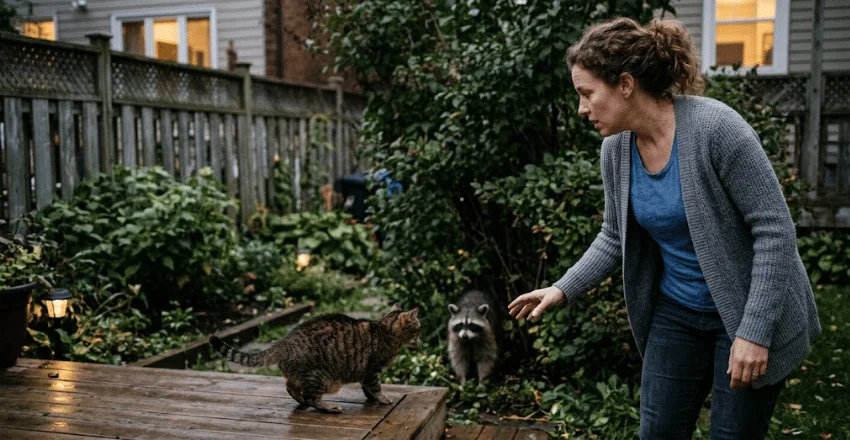
A raccoon is capable of seriously hurting a cat even when it did not approach the cat as prey. Wildlife conflicts can escalate when animals compete for food, when a raccoon is cornered, or when another animal approaches a den, and government guidance recognizes raccoons as a potential threat to small pets. Kittens should receive particular protection because their size and limited ability to defend themselves make an encounter more dangerous.
Documented U.S. incidents include domestic cats fighting raccoons, including cases that prompted rabies investigations by public-health departments. Such reports show why a fight should be treated as a genuine veterinary concern, but they do not mean raccoons routinely stalk cats as prey. The practical goal is to prevent close contact rather than trying to determine which animal would “win” a fight.
| Situation | Relative concern | Why |
|---|---|---|
| Healthy adult indoor cat | Low | Little opportunity for direct contact |
| Supervised adult cat outdoors in daytime | Lower | Owner can reduce access to wildlife |
| Free-roaming cat after dark | Higher | Activity can overlap with nocturnal raccoons |
| Cat eating from an outdoor bowl | Higher | Food can attract raccoons and trigger competition |
| Kitten or very small cat outdoors | Higher | More vulnerable to wildlife |
| Sick, injured, or elderly outdoor cat | Higher | May have difficulty escaping |
| Any cat that fought with a raccoon | Urgent | Injury and rabies exposure require professional assessment |
Why Raccoons Come Near Cats in the First Place
Raccoons thrive around people because homes and neighborhoods can provide food, water, and shelter. Trash cans, pet bowls, fallen fruit, gardens, unsecured compost, and accessible structures can turn a yard into an easy feeding area, while California wildlife officials warn that raccoons can become conditioned to human food sources. A raccoon returning to a patio every night may therefore be following a dependable meal rather than seeking out the household cat.
Cat food is especially important because leaving it outdoors concentrates domestic animals and wildlife around the same resource. Massachusetts wildlife officials advise residents not to put pet food outside, while Tennessee’s wildlife agency identifies food-bowl competition as a common source of pet conflicts. Scheduled indoor feeding is consequently safer than keeping a full bowl on a porch overnight.
Are Raccoons Dangerous to Cats Because of Disease?
Physical injury is only part of the concern because raccoons are an important wildlife reservoir for rabies in parts of the United States. The CDC states that raccoons, bats, skunks, and foxes are among the animals most frequently found with rabies nationally, and raccoons are an established reservoir, particularly in the eastern United States. Rabies can spread to pets through bites and scratches, so keeping a cat’s rabies vaccination current remains important even when the pet normally stays close to home.
Raccoons can also contaminate yards with Baylisascaris procyonis, commonly called raccoon roundworm. CDC guidance explains that infected raccoons pass eggs in their feces and may repeatedly defecate in communal sites known as latrines, while contaminated soil and objects can remain a health concern. This is another reason to discourage raccoons from gathering around areas used by pets and family members rather than feeding or tolerating them at close range.
Seeing a raccoon during daylight does not, by itself, prove that the animal has rabies. Wildlife agencies note that healthy animals may sometimes be active during the day while searching for food or caring for young, although unusual aggression, severe disorientation, paralysis, or other abnormal behavior warrants caution. People and pets should keep their distance, even if the raccoon appears healthy.
7 Ways to Protect Cats From Raccoons
Preventing an encounter is safer than trying to stop one after it begins. Most useful precautions involve removing food rewards, reducing unsupervised nighttime activity, and keeping veterinary protection current. These seven measures address the situations U.S. wildlife and public-health agencies most consistently warn about.
Keep cats indoors from dusk through dawn. Raccoons are commonly active at night, so bringing cats inside reduces the period when the two animals are most likely to cross paths.
Feed cats indoors. Do not leave cat food, treats, or full bowls on the porch overnight, because wildlife agencies specifically identify outdoor pet food as a raccoon attractant.
Secure garbage and other food sources. Use tightly closed trash containers, pick up fallen fruit, and avoid providing intentional or accidental meals for wildlife.
Use supervised outdoor time or a secure catio. A protected enclosure gives a cat fresh air while reducing the chance of direct encounters with raccoons and other wildlife.
Close potential denning access around the home. Secure openings leading beneath porches or into sheds, chimneys, attics, and similar spaces, and seek wildlife-control advice before disturbing an occupied den.
Keep rabies vaccination current. CDC guidance recommends rabies vaccination for cats according to applicable state and local requirements because exposure to infected wildlife can have serious consequences.
Never encourage raccoons to approach your pets. Do not hand-feed raccoons, deliberately let a cat interact with one, or assume repeated peaceful visits make a wild animal safe.
Cats with specialized indoor-living needs may require additional environmental planning. For example, Contntra’s Hairless Cat Ownership Guide discusses indoor care, temperature protection, nutrition, and everyday routines for hairless breeds. The same principle of creating an engaging indoor environment can help make nighttime confinement easier for many cats.
What Should You Do if a Raccoon Fights With Your Cat?
Treat a confirmed fight, bite, or scratch as a veterinary issue even if your cat seems normal afterward. Wear gloves if you must handle a pet that could have fresh wildlife saliva on its coat, separate the cat from other animals, and contact your veterinarian promptly with details about what happened. Rabies-exposure management depends on vaccination history, local regulations, the circumstances of the encounter, and public-health assessment.
For cats that are current on rabies vaccination and judged to have been exposed, CDC veterinary guidance calls for an immediate booster followed by owner supervision and monitoring, while management is considerably more restrictive for unvaccinated animals. Owners should therefore not wait for symptoms before asking for professional advice. Rabies is preventable when exposures are handled correctly, but clinical disease is nearly always fatal once it develops.
If a person was bitten, scratched, or exposed to saliva while trying to separate the animals, human medical advice is also important. CDC guidance recommends immediately washing a possible rabies-exposure wound thoroughly with soap and water for 15 minutes and contacting a healthcare or public-health professional to determine whether post-exposure treatment is needed. Do not use bare hands to break up a wildlife fight or capture the raccoon for testing.
Can Cats and Raccoons Simply Live Together?
A cat and raccoon may occasionally share a yard without fighting, but peaceful encounters should not be interpreted as a safe relationship. Sharing food or repeatedly allowing the animals to approach each other creates unnecessary opportunities for bites, scratches, disease exposure, and defensive behavior. Wildlife should remain wildlife, and pet owners should manage food and outdoor access so neither species is encouraged to interact.
This is especially relevant for people caring for community or feral cats because feeding stations can remain outdoors for long periods. When possible, feed on a schedule, remove leftovers promptly, clean the area, and avoid leaving bowls out overnight. The objective is not to harm or starve local raccoons but to stop teaching them that the cat-feeding area provides a reliable meal.
Frequently Asked Questions
Do Raccoons Eat Kittens?
A raccoon is more capable of harming a kitten than a healthy adult cat because kittens are smaller and less able to escape or defend themselves. Government wildlife-safety guidance includes kittens among small pets vulnerable to raccoons and other predators. Kittens should therefore never be left outdoors unsupervised in an area visited by wildlife.
Do Raccoons Attack Cats Over Food?
They can, and competition around outdoor food is one of the more preventable causes of conflict. Tennessee wildlife officials specifically state that most raccoon conflicts with cats or dogs occur because of competition over outdoor food bowls. Feeding indoors and removing leftovers greatly reduces this attraction.
Are Raccoons Afraid of Cats?
You should not assume a raccoon will automatically be frightened away by a domestic cat. Individual animals react differently, and a raccoon that has learned to associate a yard with food may continue returning despite the presence of pets. A safer strategy is to remove attractants and separate the animals rather than relying on the cat as a deterrent.
Can a Cat Fight Off a Raccoon?
A cat may escape or defend itself, but there is no safe outcome to predict before a wildlife fight begins. Raccoons have teeth and claws capable of causing significant wounds, while the cat can injure the raccoon in return. Preventing the encounter is far safer than testing which animal is stronger.
Do Raccoons Eat Cats at Night?
Raccoons are more likely to encounter outdoor cats at night because raccoons are commonly nocturnal, but that does not mean they routinely hunt cats. Food bowls, trash, fallen fruit, shelter, and other attractants are much more typical reasons for raccoons to visit residential property. Bringing cats indoors at night reduces the opportunity for a confrontation.
What Should I Do if I See a Raccoon in My Yard?
Bring pets and children indoors and allow the raccoon space to leave instead of approaching or cornering it. Remove accessible food sources after the animal has gone and secure trash, pet food, and openings that may encourage repeat visits. Contact local animal control or a qualified wildlife professional when an animal appears injured, trapped, unusually aggressive, or repeatedly causes a safety problem.
The Bottom Line
So, do raccoons eat cats? Healthy adult cats are not normal raccoon prey, but raccoons are opportunistic wild animals, and serious conflicts can occur when vulnerable cats, outdoor food, territorial behavior, or unexpected close contact bring the two species together. The safest approach is simple: feed pets indoors, keep cats inside at night, remove wildlife attractants, keep rabies vaccinations up to date, and call a veterinarian promptly after any direct fight or bite.
For additional animal-care information, readers can browse Contra’s Pets section. Keeping the separation between pets and wildlife clear protects the cat and reduces the chance that local raccoons become dependent on human food.