


Seeing “select all the correct responses” means more than one option may be right. You must judge every choice against the question instead of hunting for one best answer. The safest method treats each option as a separate true-or-false decision.
Multi-select questions ask you to identify every option that satisfies the question. Read the stem first, define what counts as correct, then test each choice independently. Do not stop after finding one strong answer, and do not assume a fixed number of choices must be selected.
| Quick fact | What it means |
|---|---|
| Question type | Multiple-response, multi-select, or select-all-that-apply |
| Main task | Judge every option against the same rule |
| Number of right options | Varies by exam or platform |
| Best approach | Treat each choice as an independent true-or-false decision |
| Scoring | May be exact-match, partial-credit, or penalty-based |
| Biggest risk | Selecting a partly true or unrelated distractor |
What the Instruction Means
The instruction signals a multiple-response question rather than a standard single-answer item. Several choices can satisfy the stem, although the exact number depends on the test. Your job is to evaluate the entire list before submitting.
On the NCLEX, the official FAQ says “select all that apply” means one or more options are correct. Other tests may define the format differently, so local directions still matter. Always treat the exam’s own instructions as the final rule.
What You’ll Need
You do not need a special trick or a fixed answer count. You need a clear reading of the stem and reliable knowledge of the topic, which the plain-English guides in Contntra’s Education section can help you build. A quick review of the platform’s scoring rules can also prevent costly assumptions.
- The question stem and every answer choice.
- A clear definition of what the stem is asking.
- Reliable course, training, or subject knowledge.
- Awareness of any partial-credit or penalty rules.
- Enough time to review every option once.
How to Select All the Correct Responses Without Guessing
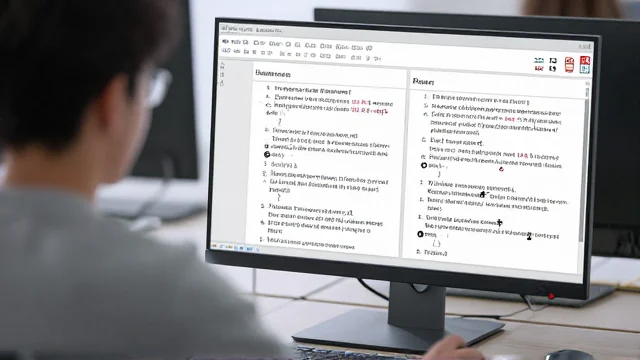
- Read the stem before the options. Identify the task before any answer choice can influence your thinking.
- Mark important qualifiers. Watch for words such as all, except, first, most, not, and best.
- Turn the stem into one rule. State the condition that every selected option must satisfy.
- Test each choice independently. Ask whether that single option satisfies the rule without comparing it with neighboring choices.
- Reject partly true answers. Leave an option unchecked when it fails an important condition in the stem.
- Recheck negative wording. Slow down when the question asks what is not correct or asks for an exception.
- Review the full set once. Confirm every selected choice fits and every rejected choice fails the same rule.
This routine prevents one attractive option from controlling the rest of your decisions. It also reduces the urge to pick a familiar-looking pair without checking each choice. With practice, the question becomes several smaller decisions instead of one confusing block.
Why Multi-Select Questions Feel Harder
Single-answer questions let you compare choices until one becomes best. Multi-select items remove that safety net because two or more choices may independently fit. That creates more opportunities for doubt, especially when distractors contain partly true details.
A useful countermeasure is to convert each choice into a true-or-false statement. Nursing test-taking guidance from Phoenix College recommends evaluating every option independently. That principle also works for classroom quizzes, certification tests, and online training.
Another challenge is the temptation to count answers before evaluating them. Test takers often expect two or three choices because previous questions followed that pattern. A better approach ignores patterns and asks whether each option satisfies the stem.
Scoring Rules Can Change Your Strategy
Scoring rules are not universal, so do not carry one platform’s rules into another exam. The current NCLEX FAQ describes partial-credit methods for items with multiple keys. Its plus/minus method awards points for right selections and subtracts points for wrong selections.
Canvas uses its own rules for multiple-answer questions. In Classic Quizzes, it divides available points by the number of right answers. It awards that amount for a selected right answer and subtracts it for a selected wrong answer.
| System example | What the current guidance says | Practical lesson |
|---|---|---|
| NCLEX | Multiple-key items can receive partial credit under defined scoring methods | Avoid careless over-selection because wrong choices can reduce points |
| Canvas Classic Quizzes | Correct selections earn a fraction, while incorrect selections can subtract the same fraction | Check each option before marking it |
| Canvas New Quizzes | Instructors may use partial credit with penalty or exact match | Know the quiz setting when it is provided |
Canvas New Quizzes can use either partial credit with a penalty or exact-match scoring. That difference shows why platform settings matter before you rely on a familiar strategy. Current instructions should guide your scoring expectations.
Those examples show why guessing by habit can backfire. Before an important test, confirm whether scoring is exact-match, partial-credit, or penalty-based. Then apply the same careful option-by-option reasoning under the actual rules.
Common Mistakes to Avoid
- Stopping after one answer: Finding one right choice does not mean the question is finished.
- Choosing by pattern: Do not assume the test always has two or three right options.
- Selecting partly true statements: An answer must satisfy the full condition in the stem.
- Comparing choices too early: Similar wording does not prove two answers rise or fall together.
- Missing negative words: “Except” and “not” can reverse what the question asks.
- Over-selecting for safety: Extra guesses can hurt when the system penalizes wrong selections.
Most mistakes come from process failures rather than the question format itself. A strong routine slows you only during the decisions that deserve attention. It also makes review faster because you know why each box was checked.
A Worked Multi-Select Example
Practice question: Which of the following are renewable energy sources? Select all that apply.
| Option | Select it? | Reason |
|---|---|---|
| Solar energy | Yes | Sunlight is naturally replenished |
| Coal | No | Coal is a finite fossil fuel |
| Wind energy | Yes | Wind is naturally replenished |
| Gasoline | No | Gasoline is produced from finite petroleum |
| Hydropower | Yes | Flowing water is renewed through the water cycle |
The answer set is solar, wind, and hydropower. Notice that you never needed to guess how many choices should be marked. You only tested each option against one rule: whether the source replenishes naturally on a human timescale.
You can use the same method for history, workplace training, science, security awareness, and professional exams. The subject changes, but the decision process stays stable. Define the criterion first, then test every choice against it.
How to Handle Unfamiliar Wording
When a question uses unfamiliar wording, define the key term before judging the options. Contntra’s dispositional meaning guide shows why context can change how a term should be read. Building that vocabulary habit can remove confusion before you even evaluate the choices.
Question-driven explainers can also help you study the reasoning behind an answer. Contntra’s IRB system explainer and suspicious-package guide both unpack “which of the following” style prompts. Use them as models for checking definitions, context, and evidence before choosing an option.
If the stem contains a word you cannot define, look for context clues before guessing. Check whether the course materials use the term in a technical or everyday sense. A precise definition often removes two or three distractors immediately.
How to Review Your Answer Set
Start your review with the stem, not with the boxes you already checked. Restate the rule in a short phrase and test every selected option again. This prevents your earlier choices from becoming assumptions you no longer question.
Next, inspect every unselected option for a missed condition. Ask whether you rejected it because it was false, irrelevant, or only partly true. If you cannot explain the rejection, revisit the source material or reasoning.
Finish by checking the platform instructions when they are visible. Some systems reveal whether a fixed number of answers must be chosen. Others leave the number open, so the content must guide every selection.
Frequently Asked Questions
How many answers can be correct in a multi-select question?
The number depends on the exam. NCLEX says its multiple-response format may have one or more correct options. Other platforms may set different rules, so do not assume two, three, or any fixed count.
Do multi-select questions give partial credit?
Sometimes, but not always. NCLEX and Canvas both support forms of partial credit, though their calculations differ. Check the current instructions for your exact exam or learning system before relying on partial points.
Should I select an answer that is only partly true?
Select it only if it fully satisfies the stem as written. A statement can contain a true fact and still fail the question’s condition. Treat every qualifier in the stem as part of the rule.
What does “select all the correct responses” mean?
It means every option must be judged, and more than one may be right. Select each choice that fully satisfies the question’s criteria. Leave unchecked any choice that fails the rule, even if part of it sounds familiar.
Build a Repeatable Routine
Multi-select questions become easier when you use a repeatable process instead of counting likely answers. Read the stem, define the rule, and test every option on its own. For more plain-English learning guides, browse Contntra’s Education section.

